Anonymity Is Required

In the context of the Gizmodo social hack, Seth writes:

"Anonymity is the enemy, whether it’s online or walking around a trade show with a clicker in your pocket."

I vehemently disagree with Seth’s statement.  Here’s why.

Seth’s viewpoint of "anonymity is the enemy" only works if one is secure: physically, financially and emotionally.  Unfortunately, there are still many, many people in the world where that is not the case.  Here are three:

  • Whistleblowers
  • Political Dissidents
  • Victims of violent or family crime

For any of those groups, anonymity is the means through which they can effect change.

In some cases, for those groups, anonymity is the thing that’s keeping them alive, literally.  On that note, I want to make a shout out to the TOR Project.  The TOR site says:

"Hundreds of thousands of people around the world use Tor for a
wide variety of reasons: journalists and
bloggers, human rights workers, law enforcement officers, soldiers,
corporations, citizens of repressive regimes, and just ordinary
citizens. See the Who Uses Tor? page for
examples of typical Tor users.
See the overview page for a
more detailed explanation of what Tor does, why this diversity of
users is important, and how Tor works."

What Gizmodo did was a social hack, not unlike a flashmob or Santarchy

It was not a crime, as Seth called it. 

If someone turning off a TV is a crime to get up in arms about where you live, consider yourself very, very fortunate.

Really Graphic

Mr. K describes himself thusly:

"Mr. K spent 15 years in the software business. He became
disillusioned during the dot com boom (fortunately before the crash)
and decided to pursue a career as a teacher.

He is currently teaching math to selected low performing eighth graders at a middle school in east Los Angeles.

This blog is an attempt to capture, in a human form, how he tries to teach."

I just came across a recent post where Mr. K used four simple images to represent his self-assessment of the last year with respect to work/life balance.  Here they are:

Time

Annual_report002thumb


Exercise

Annual_report003thumb

School

Annual_report004thumb


Relationship

Annual_report005thumb


And, when you put them all together, they tell a story. (By the way, Mr. K. just started blogging in December, 2007.)

How do you tell your stories?

…And We’re Back

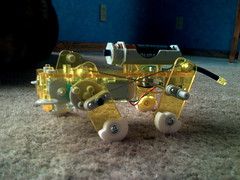
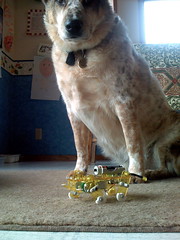
The Coastside got pounded today with an amazing storm.  Nine hour power outage; everything’s coming back on line now.  So, while the power was out, we built a robot.  Will have pix in a bit.

Positively Certifiable

Pamacertifmarkmed
The great thing about social media is that it really is applicable across nearly every industry. As a result, the Cerado team gets exposed to a lot of interesting things along the way in domains that we normally wouldn’t experience in our day-to-day lives.

For example, did you know that the mechanics who work on aircraft do not need to be certified in order to do so? I bet you didn’t, and I wouldn’t be surprised if your opinion surrounding this area has now changed due to this revelation. Now, whilst they may not need to have a certification to work on the maintenance of such aircraft, they will almost definitely need a maintenance stand, that can be found at places like Platforms and Ladders – https://www.platformsandladders.com/aircraft-maintenance-products/model-15f1900-b1-maintenance-stand/ – to help them reach all areas of this mode of transportation to complete the job at hand. This will also maintain their safety at all times too which is very important in this industry. Whilst the mechanics don’t need a certification, it’s important to note that aircraft mechanics who are not certified must work under the supervision of a certified mechanic who can sign approval of the work before the aircraft or its equipment is considered airworthy. But still. I didn’t know that either until we started working with the Professional Aviation Maintenance Association (PAMA) last year, in helping them bring a new aviation maintenance certification to market. This certification will enable employers in the aviation industry to have a baseline from which to know which of their technicians actually have “the right stuff” and will also enable those in the industry to have a verifiable way to show their skills and separate themselves from the pack.

Although the PAMA certification journey is just starting, there’s already a ton of great stuff going on. PAMA is already:

Brian Finnegan, who is the Director of Certification Programs for the SAE Institute (PAMA’s sister organization) and the former President of PAMA itself, completely “gets it” with respect to what “conversation” means. The blog accepts unmoderated comments, and the JetBlast! Network accepts unmoderated postings. Of course, in an industry that is sometimes resistant to change (and where the “new” planes are sometimes 20 years old), Brian takes a David Sifry -esque approach to dealing with the issues that are raised in those areas of the community. (For example, here’s a good case study of how to handle criticism from a community member.)

So, the next time someone scoffs and says that this whole blogging / social media / community thing is just for geeks, point them over toward the PAMA site and show ’em how it’s being done in the real world.